Text or Die
Rollic GamesTrivia
4.122.29K Reviews
- Version
- 30.2.2
- Installs
- 10.00M
- Age Rating
- Everyone 10+
Screenshots
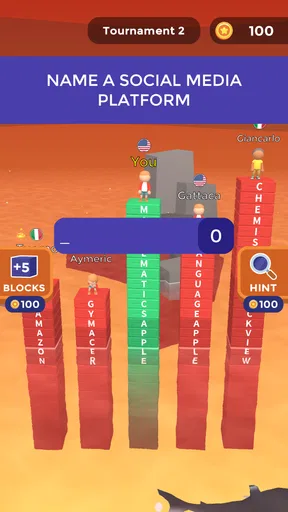
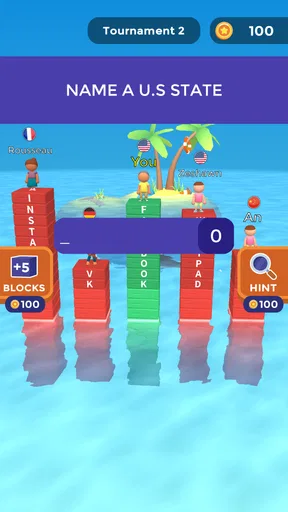
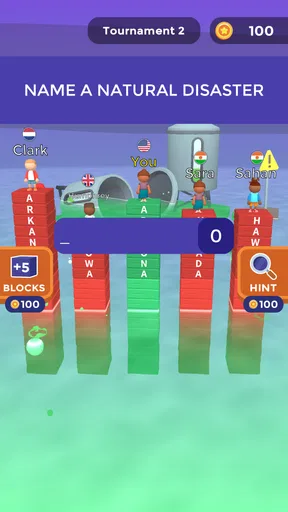
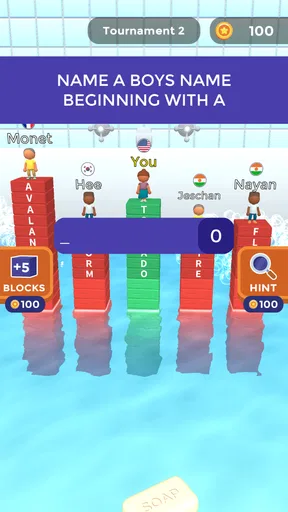
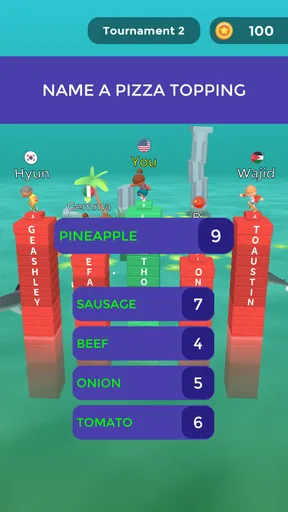
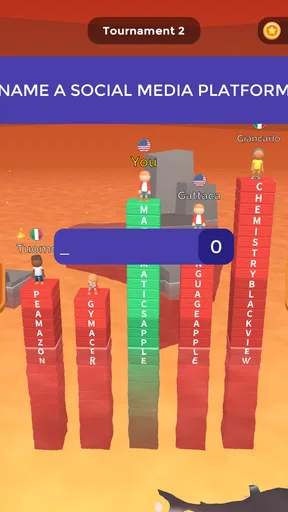
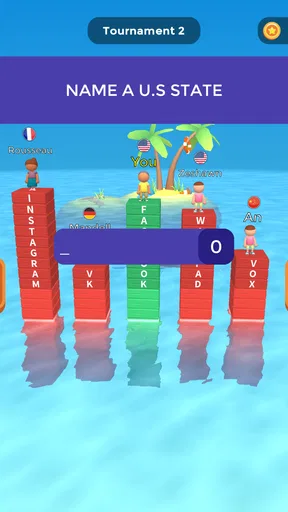
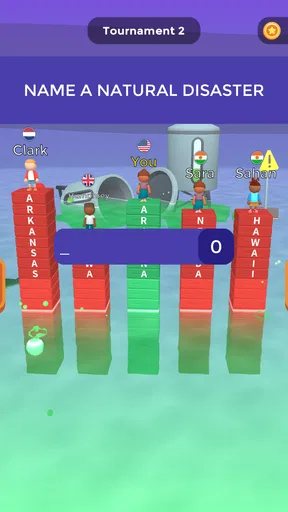
Our Review of Text or Die
 Analysis by Appyee
Some trivia games test what I know; Text or Die tests how quickly I can turn that knowledge into a useful answer. Its central idea is wonderfully easy to understand: a question appears, I type a word, and the goal is to give a long answer before danger catches up with me. That simple setup gives ordinary vocabulary a surprisingly competitive edge.
After spending time with it, I see why the game has reached a broad audience. It is a free trivia game from Rollic Games, rated 4.1 on average from around 285 thousand ratings, with over 10 million installs. Those figures suggest a game that is easy to pick up rather than a niche quiz designed for dedicated trivia experts. The age guidance is Everyone 10+, which fits the playful presentation and straightforward rules.
My first impression was that this is less about proving I know obscure facts and more about recognizing the answer that gives me the most useful letters. That distinction matters. If a prompt asks for a type of fruit, “apple” may be correct, but a longer valid answer can be safer. The game turns familiar questions into small decisions about wording, spelling, and risk.
Why the simple premise works so quickly
The opening moments are deliberately direct. I do not need a long explanation before understanding the objective. The interface presents a prompt, gives me a place to type, and makes the consequences visible through the survival theme. I can begin playing almost immediately, which makes it a natural choice for a short break, a waiting room, or a few rounds before bed.
The shark setting gives the answers a reason to matter. Without that pressure, typing a longer word would feel like a minor scoring trick. Here, the visual threat turns vocabulary into protection. The more useful answer helps me stay above danger, so every question has a small tactical layer even when the subject is familiar.
I also like that the game does not require a perfect trivia memory to be enjoyable. A player who knows many common answers can do well, but success also comes from thinking laterally. When I see a broad category, I try to avoid the first answer that enters my head and search for a longer, sensible alternative. That habit is the first important tip: answer length is part of the strategy, not just a by-product of knowing the subject.
The trade-off is that the game can feel less like traditional trivia if I want one clearly correct answer. Its appeal comes from finding a strong answer among several possible answers. Players who prefer carefully researched questions, detailed explanations, or a serious quiz atmosphere may find this format too lightweight. For casual competition, though, the low barrier is a strength.
The visual language of a playful survival game
The art direction supports the premise without trying to make the game look realistic. The setting communicates danger in a cartoon-friendly way, so the shark creates urgency without making the experience unpleasant for younger players. The visual language is bright, readable, and built around the immediate relationship between my answer and my safety.
That clarity is more important than decorative detail. I can quickly understand who is ahead, who is exposed, and why a longer response matters. The environment functions almost like a scoreboard. Instead of presenting trivia as a static list of questions, the game turns progress into something I can see developing around the characters.
This visual approach also helps the game maintain its identity between rounds. The questions may change, but the basic image of typing to avoid a shark remains consistent. I never feel as if the presentation is fighting the mechanics. The setting is there to give the word game a mood and a consequence, not to distract me with an unrelated story.
One subtle strength is how the cartoon danger makes mistakes feel temporary. If I give a short answer or misunderstand a prompt, the result feels like a funny setback rather than a harsh failure. That tone encourages another attempt. It is a useful design choice for a trivia game that depends on experimentation, because I can test a more ambitious answer next time without feeling that the game is punishing me personally.
Still, the presentation may not satisfy players looking for a rich world to explore. This is not an adventure with deep locations, character development, or a narrative mystery. The shark and water setting are a frame for the quiz loop. I appreciate that restraint, but anyone choosing a game for its story or detailed world-building should look elsewhere.
How sound and pacing shape each round
The sound design works best as support rather than spectacle. The game’s mood comes from the combination of a playful danger theme, quick prompts, and visible movement toward a result. Audio helps make the rounds feel active, but the words on screen remain the main event. That balance is appropriate because a trivia game must keep the question readable and the answer easy to enter.
The pacing is one of the strongest reasons I would recommend it for casual play. A round does not ask me to commit to a long session before I see the outcome. I can play a handful of questions, learn from how other answers compare, and stop without losing the feeling that I completed something. It fits the rhythm of mobile use better than a lengthy quiz show format.
There is also a useful change of mental tempo inside each round. First I read and interpret the prompt. Then I search for a longer answer. Finally I watch the result and adjust my approach. That cycle is short, but it prevents the game from becoming a completely passive test of recall. I am constantly switching between language, judgment, and observation.
My practical advice is to avoid typing the first acceptable answer automatically. Give yourself a brief moment to ask whether the category allows a longer, equally natural response. That pause is often more valuable than trying to recall an obscure fact. At the same time, I would not overthink every prompt. A strange or overly specific answer can be riskier than a familiar one, so the best choice is usually the longest answer I can confidently justify.
The quick pacing has a downside. If I want time to debate several possibilities or learn why an answer is correct, the game can feel too abrupt. It is built around momentum and replayability, not deep explanations. Compared with a conventional quiz app that teaches history, science, or geography after each question, this one offers less educational follow-through.
Where the trivia mechanics meet the survival theme
The most interesting mechanical decision is the trade-off between certainty and length. A short answer may be safe in terms of meaning, but it can leave me vulnerable. A longer answer may improve my position, yet it also gives me more chances to misspell something or choose an answer the game does not accept. That tension gives the typing mechanic real purpose.
This is where the game differs from ordinary multiple-choice trivia. In a standard quiz, I mainly identify the correct option. Here, I shape the answer myself. That makes language knowledge more important than button recognition. It also means the game can reward flexible thinking: I may know the topic without immediately knowing the best way to phrase my response.
Another useful insight is that categories should be approached differently. For a narrow prompt, I usually aim for the longest answer I can recall with confidence. For a broad prompt, I think in groups before typing. If the question concerns animals, foods, places, or objects, I mentally scan for a longer familiar example rather than settling on the first short word. This workflow improves decision-making without requiring a separate strategy guide.
Spelling deserves attention too. A long answer is only helpful if I can enter it accurately and quickly. When I am uncertain between two similar words, the shorter correct option may be the better tactical choice. That is an important limitation of the concept: vocabulary knowledge alone is not enough. Typing confidence and speed affect the value of what I know.
The competitive structure also makes the game suitable for informal sharing. I can imagine handing the phone to a friend and comparing how each of us interprets the same prompt. The fun comes from seeing that one person chooses a common short answer while another immediately thinks of a longer possibility. It creates conversation without requiring a formal multiplayer setup or a long explanation of rules.
However, players should understand what kind of challenge they are getting. This is not a rigorous knowledge database, and it is not the best choice for measuring factual expertise. The emphasis on word length can sometimes overshadow whether an answer demonstrates deeper understanding. If my priority is learning reliable facts, a focused educational quiz is a better fit. If my priority is quick decisions with a trivia flavor, this design is much more effective.
Everyday situations where it fits—and where it does not
A realistic use case is a short commute or a few minutes while waiting for an appointment. I can start a round without preparing a playlist, reading instructions, or remembering a complicated control scheme. The game gives me a compact mental activity that is more engaging than scrolling but less demanding than a full strategy game.
It also works well as a light group activity. Friends can debate what counts as the longest sensible answer, compare their instincts, and laugh at unexpectedly short responses. The shark theme gives those discussions a visible payoff, because everyone can see why one answer was more useful than another.
I would be more cautious about recommending it for someone who dislikes pressure while answering. The survival framing is playful, but it still creates a sense of urgency. A player who prefers unlimited time, detailed hints, or calm learning may find the pacing uncomfortable. Likewise, people who dislike typing on a phone may not enjoy a game where entering the answer is central rather than incidental.
The free price makes it easy to try, but the game includes in-app purchases ranging from $0.99 to $24.99 per item. I would approach those purchases carefully and decide in advance whether the basic loop is enjoyable without spending. The core appeal is the word-and-survival challenge, so I would not treat optional spending as necessary before knowing whether the format suits me.
On device compatibility, the listed minimum is Android 7.0, while the current version is 30.0.2. That makes it accessible to many Android users, though the experience can still vary with screen size, keyboard comfort, and device performance. For this particular game, a comfortable keyboard matters more to me than having the newest phone, because fast and accurate text entry directly affects play.
How it compares with familiar trivia alternatives
Compared with multiple-choice trivia games, this one gives me more ownership over each response. I am not simply selecting from options designed by the developer. I have to produce an answer and judge whether a longer one is worth the risk. That makes the experience more expressive and less predictable, although it can also feel less precise.
Compared with word puzzles, it has a stronger sense of immediate competition. A word puzzle may reward careful deduction over several minutes; this game asks me to make a useful choice quickly. The shark setting adds a clear consequence that many vocabulary games lack. On the other hand, traditional word puzzles often provide more depth and a greater sense of solving a carefully constructed challenge.
Compared with educational quiz apps, the focus is much more on replayable tension than on instruction. I would choose this game for a quick burst of entertainment, not for studying a subject systematically. If I wanted to improve at geography, science, or history, I would prefer an app that explains answers and tracks learning by topic.
That comparison helps define the ideal audience. Text or Die is best for people who enjoy casual trivia, quick typing, and the satisfaction of finding a longer answer under pressure. It is less suitable for players seeking a serious quiz competition, a narrative adventure, or a detailed educational tool.
My final view of the atmosphere and the loop
What holds the experience together is the agreement between presentation and mechanics. The cartoon shark is not just a theme placed over a generic quiz. It gives the answer length a visible consequence, while the quick pacing keeps that consequence immediate. The art, setting, and rhythm all point back to the same question: can I think of a longer answer before I am in trouble?
I especially value the way the game turns ordinary vocabulary into a tactical resource. I do not need specialist knowledge to enjoy it, but I do need to be flexible. The strongest moments come when I recognize a prompt, reject my first short answer, and find a longer response that still feels natural. That small act of reconsideration is the game’s real hook.
Its limitations are equally clear. The format may feel shallow to serious trivia fans, the fast input can frustrate players who prefer reflection, and the word-length objective is not the same as factual depth. The optional purchases also mean I would keep an eye on spending rather than assuming every extra is essential.
Even with those reservations, I think it is an easy game to recommend to a friend who wants something quick, readable, and a little competitive. Text or Die is at its best when treated as a playful vocabulary duel, not as a comprehensive quiz course. If that distinction sounds appealing, the free download is worth trying. If I wanted calm lessons, exact knowledge testing, or a substantial story, I would choose a different category instead.
Privacy and Permissions
See what permissions an app requests and how it handles your data.
- Wi-Fi connection information
- view Wi-Fi connections
- Other
- view network connections, allow Wi-Fi Multicast reception, full network access, control vibration, prevent device from sleeping, Google Play license check
Verdict
Strengths of Text or Die
- Simple controls make it easy to start playing immediately.
- Short rounds are convenient for quick gaming sessions.
- Word choices can help expand vocabulary over time.
- Colorful visuals and animations make matches feel lively.
- Free access lets players try the core game without paying.
Limitations of Text or Die
- Some answers may be judged inconsistently by the word database.
- Ads can interrupt the experience, especially between short rounds.
- Later stages may feel repetitive once the strategy becomes familiar.
- Online competition can be affected by inactive or automated opponents.
- Extra rewards and bonuses may encourage frequent ad viewing.
Other Releases by Rollic Games
View All


Similar Picks in This Category
View All
Millionaire 2026 Quiz & Trivia
Quiz & Trivia Games by Submarine Apps4.5

Brain Test 2: Tricky Stories
Unico Studio4.7

Trivia Crack: Brain Quiz Games
etermax4.4

QuizzLand. Quiz & Trivia game
Quiz & Trivia Games by Mno Go Apps4.8

Brain Test: Tricky Puzzles
Unico Studio4.7

Logo Quiz
bubble quiz games4.5
Frequently Asked Questions
What is Text or Die, and how does the gameplay work?
Text or Die is a casual multiplayer word game where players compete by answering prompts with words. The longer your answer, the more blocks your character receives, helping you rise above a rising water level. Choosing uncommon but valid answers can give you an advantage, while incorrect or short responses may leave your character vulnerable during the round.
Is Text or Die free to download and play?
Text or Die is generally free to download and play on supported mobile devices, although it may include optional in-app purchases. These purchases can be used for cosmetic items, bonuses, or other convenience features, depending on the version available in your region. You can usually play without spending money, but advertisements may appear during the experience.
Does Text or Die require an internet connection?
Text or Die is primarily designed around online-style competitive gameplay, so an internet connection may be required for certain features, including loading questions, displaying advertisements, or participating in multiplayer matches. Availability of offline play can vary by version and device. If you are traveling or have limited data, check the app’s current requirements before downloading.
Is Text or Die suitable for children?
Text or Die is easy to understand and uses simple word-based challenges, making it accessible to many younger players. However, parents should review the age rating, advertising, chat or social features, and in-app purchase settings before allowing children to play. Some prompts may also vary in difficulty or cultural relevance, so supervision is recommended for younger users.
What can I do if Text or Die is not accepting my answer?
The game may reject an answer because of spelling, punctuation, regional vocabulary, or because the word is not included in its accepted database. Try using a simpler, commonly recognized answer and check that there are no unnecessary spaces or typing errors. If valid words continue to be rejected, updating the app or contacting the developer may help resolve the issue.
Play our best games!


